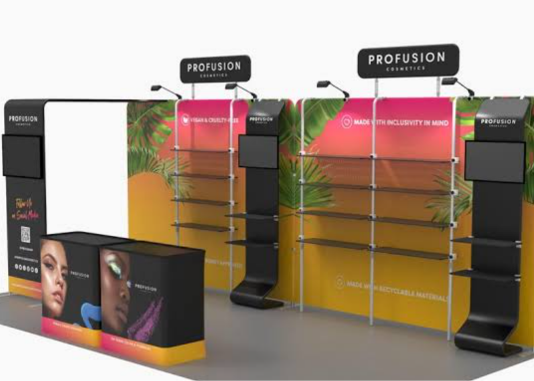
If you walk into any exhibition hall, one thing you will notice — eyes of people, they don’t land on every booth in the same way. Some booths catch attention within seconds only, others, somehow, barely get noticed at all. Mostly this is because of how the trade show display stands are designed. Like a silent salesperson, in a way, they work — telling visitors who you are and what your business does, even before any word gets spoken. Once this is understood, how these stands actually influence the behaviour of people on a busy show floor, it makes much more sense, why companies put so much thought, and budget too, into getting it right.
Why Visual Presence Actually Matters
Exhibitions move very fast. In a single day, attendees may pass by hundreds of booths, and for most of them, only a glance is given — maybe two or three seconds, before a decision is made whether to stop or just keep walking. Not a lot of time, this is, to make your case. Here is where a strong visual presence does the heavy lifting. Almost instantly it signals professionalism, and frankly, it tells the people, this business takes itself seriously. On the other side, even a genuinely good product, it can get ignored, simply because the booth around it did not stand out from all that visual clutter.
The Psychology Behind What Makes People Stop
Real psychology is there, behind why certain booths pull people in, and others just don’t. By nature, humans are wired in such a way that they notice contrast, movement, and clarity, more than anything dense or busy. Booths which lean into bold colour blocking, clean typography, and simple layouts, these tend to perform much better than ones crammed full with information. Makes sense too, if you think on it, since images we process far quicker than text. If a person can understand your core message in one glance only, just from visuals and a strong headline, much higher are the chances they will actually walk over.
How Layout Shapes the Way People Move
The physical setup of a booth, it carries a surprising amount of influence over how visitors behave, once they come near it. An open, welcoming front section, this invites people inside without making them feel cornered. On the other hand, a closed-off or cluttered layout, often it makes people hesitant even to approach. Good layout planning, it takes into account the walking paths, how the booth reads from across the hall compared to up close, and sightlines from many angles. A stand which looks impressive from far away but feels messy once you are standing right in front, this can actually do more harm than good — because that gap, between “looking impressive” and “feeling organised,” matters more than most people expect it to.
Why Branding Consistency Builds Trust Faster
Here is something which many businesses tend to underestimate: consistency, it builds trust much faster than any single flashy design element ever could. When colours, fonts, and imagery on a stand match with what is already used on a website or on packaging, people recognise the brand almost subconsciously, even without having interacted with it before. This recognition, it builds credibility quickly, saying that this company, attention to detail it pays. When a booth feels disconnected from the usual identity of a brand, confusion it can create in potential customers instead of drawing them closer — which, somewhat, defeats the whole purpose.
What Materials Quietly Communicate
Surprising it is, how much the materials of a stand communicate, even without anyone actually touching them. Lightweight fabric structures, often these feel modern and approachable. Solid panel systems, in most of the cases, read as more corporate or established. Lighting too plays its part; a well-lit stand looks far more inviting under the often harsh, flat lighting which is found in big exhibition halls. Even small details, like clean edges or how stable a structure appears when crowds brush past it, these shape the impression a person forms, within seconds of seeing it.
Matching the Display to the Size of the Event
Not every exhibition, it calls for the same scale of setup. A small industry meetup, it may suit something compact and easy to carry around, while a large international expo, often it justifies something bigger and more elaborate. Businesses who adjust their approach based on the size of event, these tend to get better results, overall. An oversized setup at a small venue, it can feel like overkill, while a minimal one at a massive expo, simply it can disappear into the background. Less it is about going big every single time, and more about reading the room — quite literally.
Final Thoughts
At the end of the day, how well an exhibition appearance performs, often it depends on how quickly a booth communicates value and pulls people toward it. Trade show display stands, these are not just decoration; a strategic part they form, of how a business gets noticed, how visitors move and behave once near the booth, and how strongly a brand identity comes through in a crowded room. As events keep growing more competitive, the businesses who pay close attention to these visual and psychological details, these are the ones who tend to stay in people’s memory, long after the show has ended.